Services
One chain of custody, from capture to destruction.
Each of these stands alone. Together they mean a document never leaves a documented trail from the day it arrives to the day it is destroyed.

Document scanning
High volume capture of files, registers and bound records, indexed so they can be found.

Electronic document management
Deployment and support of the platform that best fits your institution, not the one we happen to sell.

Physical archives
Secure storage and managed retrieval at our Jabi facility, with an audit trail on every movement.

Records management and file tracking
Retention schedules, classification and knowing where a physical file is at any moment.

Process automation
Approvals, routing and correspondence workflows built around how your office actually works.

Secure destruction
Witnessed shredding at end of retention, with a certificate for the record.

Scanners and capture equipment
Kodak Alaris accredited. Production scanners supplied, installed and supported.

Training
Records officers, registry staff and system users, trained on the standards they are held to.
Document scanning
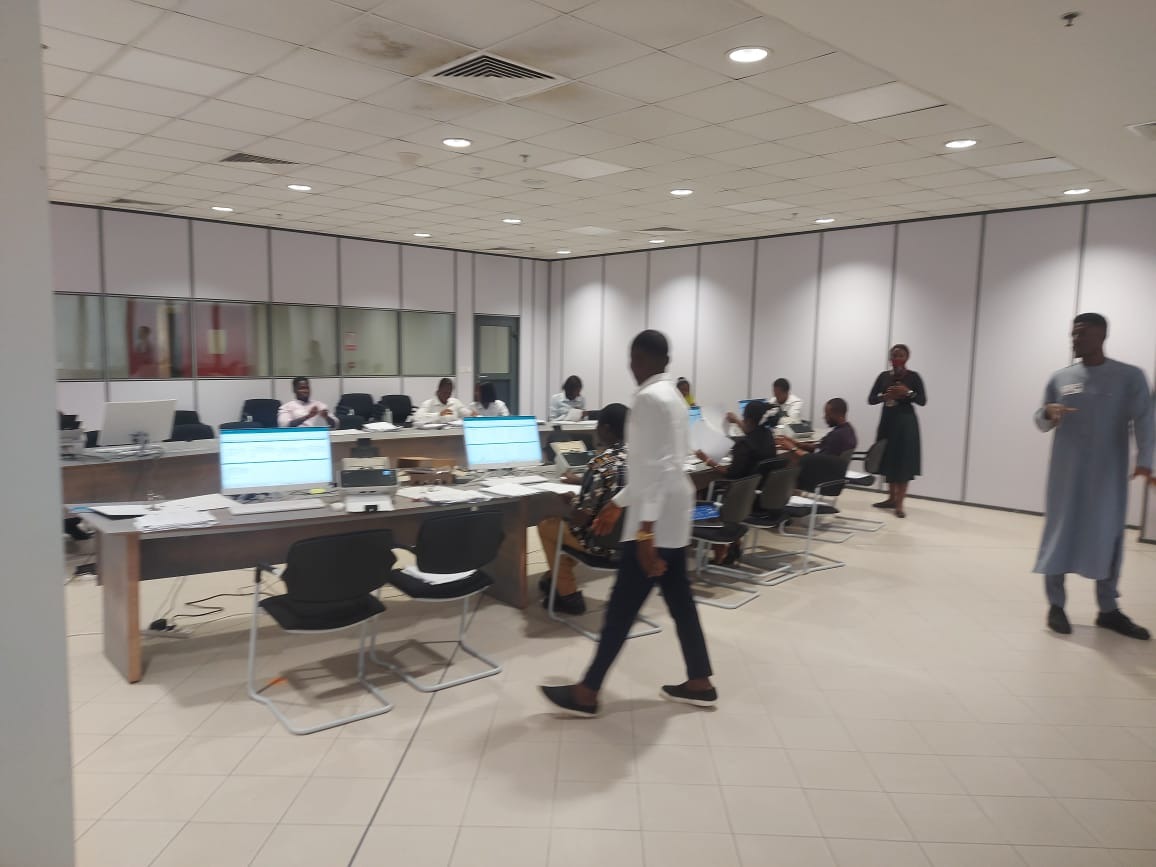
High volume capture of loose files, bound registers, plans, ledgers and photographs. Documents are prepared, scanned, quality checked and indexed against the fields your staff actually search on, which is usually a file number and a name rather than a date.
Work runs at our bureau or inside your registry, whichever your records policy allows. Where files may not leave the building we bring the equipment and operators to you and work under your supervision.
Output is delivered into the system you use, or into ours, or as searchable PDF/A for long term preservation.
A digitisation project is not measured by pages through the feeder. It is measured by whether a registry officer can produce a named file, at a stated date, in front of an auditor. That depends on preparation, on the index, on image quality, on document integrity and on chain of custody, and it is why the cheapest quote per page is usually the most expensive project.
Since 2009 we have digitised 74,785,450 pages and records across 49 completed engagements. The figure is cumulative and we can show the workings.
Electronic document management
Selection, deployment, configuration and support of an electronic document and records management system. We hold accreditations across several platforms and choose against your requirements rather than our commissions.
Deployment covers taxonomy and folder structure, retention rules, user roles and permissions, integration with the systems you already run, migration of existing files, and training for the people who will use it daily.
Where an institution needs data held in Nigeria, we deploy accordingly.
Four principles govern how we implement. Understand the business process before configuring anything. Define the information structure and the metadata carefully, because it is expensive to change later. Design security around roles and responsibilities rather than around individuals. And plan migration and digitisation as part of the information architecture, not as a separate exercise bolted on at the end.
Physical archives
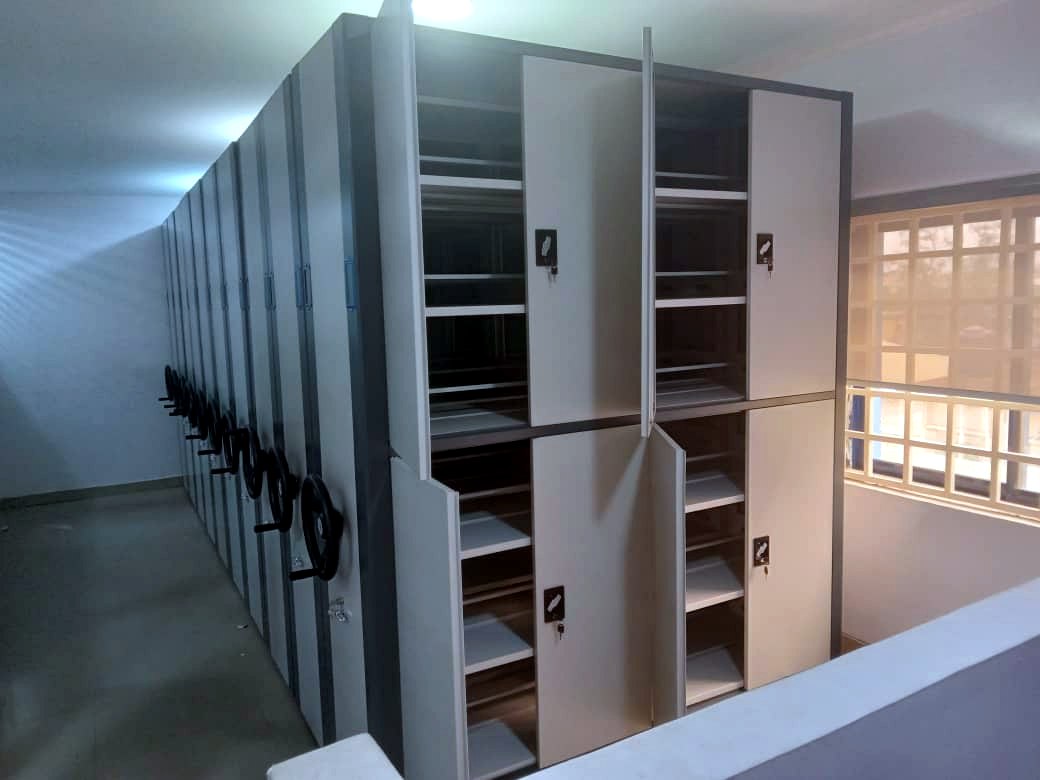
Managed storage at our Jabi facility, with barcoded boxes, controlled access and a documented movement history for every item. Retrieval is by request, delivered physically or scanned and sent the same day.
Digitisation does not remove the need for the originals. Most institutions we work with are required to keep the paper, and the practical question is whether it is stored somewhere that can produce a specific file within the hour.
We also fit out registries and archive rooms rather than only holding the boxes. Mobile shelving supplied and installed, existing physical archives reorganised against a file plan, barcode file tracking so a folder can be located at any moment, and enterprise output management where an institution generates paper faster than it files it.
Records management and file tracking
Classification schemes, retention and disposal schedules, and file tracking so a physical folder can be located at any moment: who has it, since when, and where it sits.
This is the part institutions most often skip and most often need. A registry without a retention schedule accumulates indefinitely, and a registry without tracking loses files that were never actually lost.
The wider discipline is information governance: who may see what, how records are classified, how long each class is kept, how changes are tracked, and how a record can be produced for audit or litigation. Done properly it turns document management from a storage problem into a control system the institution can actually be held to.
Process automation
Approval routes, correspondence flows, memo circulation and case files moved from paper and email into a workflow that records who did what and when.
We map the process as it is actually performed rather than as the manual describes it, because the gap between the two is where the delays live.
That work can include business process modelling, documenting Standard Operating Procedures (SOPs), identifying control gaps and preparing workflows for automation. The aim is to make responsibilities, hand-offs and approvals clear before technology is introduced.
Secure destruction
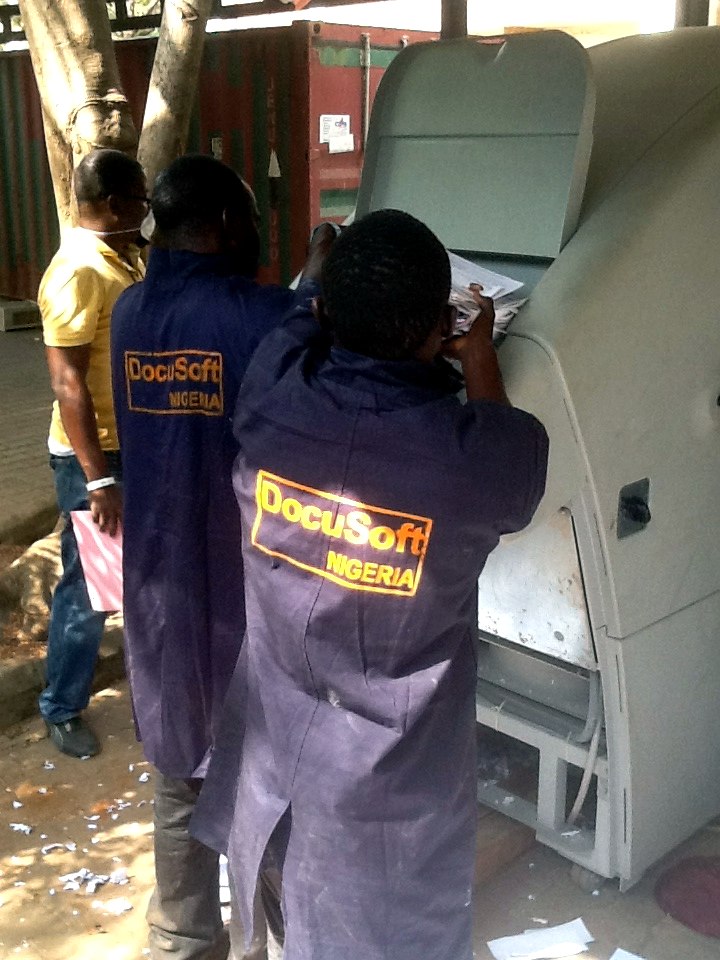
Witnessed shredding of records that have reached the end of their retention period, with a certificate of destruction and an itemised list of what was destroyed for your file.
Disposal is the step that makes a retention schedule real. Without it, a schedule is a document describing what should have happened.
Nothing leaves the shelf until the schedule has been agreed and signed. Where the material may not leave your premises we bring the equipment to it and destroy under your supervision. The British High Commission in Abuja and Lagos, and the Embassies of Switzerland, Ireland and Australia, use us for this. So has Mott MacDonald in the United Kingdom, where a single engagement ran to sixty tonnes.
Scanners and capture equipment
We are an accredited Kodak Alaris reseller and we supply, install and support production document scanners for organisations running capture in house.
Buying the scanner is the easy part. We specify against the actual document mix, which for most registries includes bound volumes, treasury paper, carbon copies and files that have been in a store room since before the operator was born. A machine rated for clean A4 at high speed will stall on all four.
Equipment is also available through our online store, and clients who start with hardware frequently come back for the bureau work when the volume proves larger than the department can absorb.
How an engagement runs
We start by counting what you are holding.
Every proposal we write begins with a records assessment on site. It produces a number: how many linear metres, in what condition, under whose custody, against what retention rule. Institutions are routinely surprised by that number, and without it a scanning quote is a guess with a price on it.
- Assessment On site. Volume, condition, custody and retention, before anything is quoted.
- Records audit Existing repositories, structures and information risk, physical and digital.
- File plan and design Classification, metadata, workflow, security and integration, agreed in writing.
- Preparation Fasteners removed, damage repaired, batching and barcode control.
- Capture and migration Scanning, enhancement, OCR where the source supports it, indexing.
- Quality assurance Sampled across every batch, not the first one. Counts reconciled against the register.
- Training Registry staff, administrators and end users, before go live rather than after.
- Handover and support Documentation, the support arrangement, and the retention calendar.
Volumes, timescales, the index schema, the sampling rate for quality assurance and who holds custody at each stage all go into the contract. If a supplier will not commit to those, the number they have quoted you is not a number.

The index is the project
Everything downstream depends on the classification agreed at the start. A file plan settled in week one costs an afternoon. The same decision revisited after two million pages have been captured costs the project.
We design it against how your staff actually search, which is usually a file number and a name rather than a date, and we test it on a real batch before scaling.
Not sure which of these you need?
That is what the assessment is for. We look at what you hold and tell you what is worth doing first.